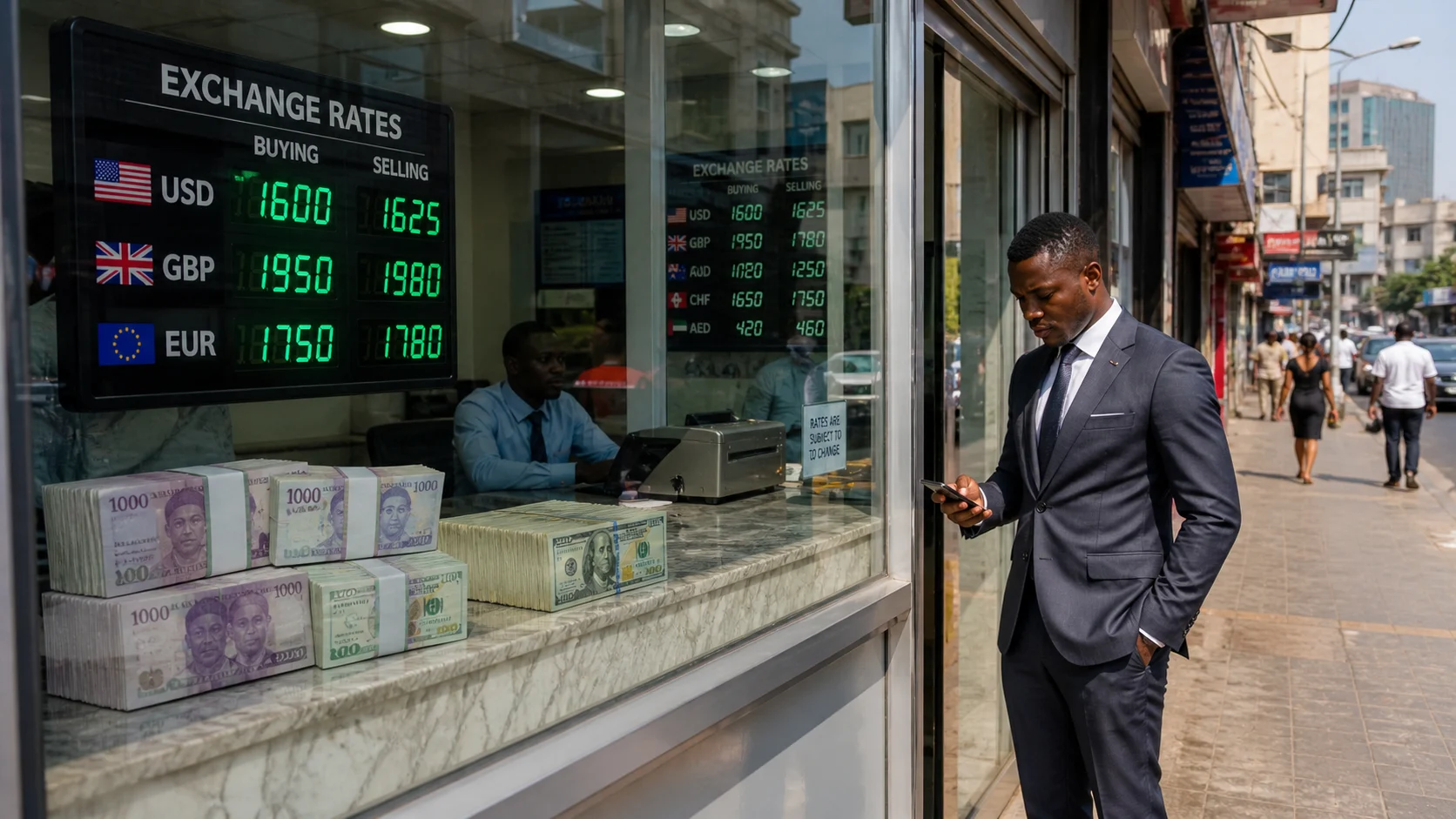
🇬🇧 British Pound to Naira today
Live black market and CBN rates · Updated 26 October 2026
💱 CBN vs Black Market
💱 Currency Converter
Why Nigerians need British Pound
The British Pound matters to Nigerians because the UK is the #1 destination for Nigerian students abroad. Over 100,000 Nigerians study in the UK, with tuition fees of £15,000-£38,000/year. Parents buying pounds for tuition face the worst exchange rate pain — the pound has risen from ₦800 in 2022 to ₦1,870 in 2026, a 134% increase.
Common British Pound amounts to Naira
Quick reference for typical amounts
💡 Tips for getting the best rate
- • Compare 3–4 BDCs in Wuse Zone 4, Broad Street, or Allen Avenue before settling — rates can vary by ₦5–₦15 per unit.
- • Larger amounts ($5,000+) usually get better rates. Some BDCs reserve their best rates for repeat customers.
- • Avoid airport BDCs — they post rates 1–3% worse than city dealers.
- • Check rates twice on the same day — the parallel market moves hourly based on dollar supply.
- • Always count notes carefully and verify serial numbers. Counterfeit dollars are common in informal markets.
📝 British Pound & the naira
For Nigerians, the British pound is the currency of education. The United Kingdom is the number-one overseas destination for Nigerian students, so sterling is the currency that funds university tuition, deposits, accommodation and living costs for tens of thousands of families — which makes the GBP–naira rate a household concern for anyone with a child studying, or planning to study, in Britain. Beyond students, the deep, long-standing Nigeria–UK diaspora link means a constant flow of pounds sent home and naira converted to pounds for fees, visits and family support.
Because so much of the demand is education-driven, it is also seasonal and lumpy: tuition deadlines and the start of academic terms concentrate large pound purchases at particular times of year, and a swing in the rate between an offer letter and a fee payment can add or remove a serious sum from a family's bill. That sensitivity is why UK-bound families watch sterling as closely as importers watch the dollar.
The practical questions are the familiar ones, sharpened by the size of the amounts involved. School fees run to millions of naira, so even a small difference in the rate or the fees matters — compare the total naira cost across banks and licensed transfer services (the ones built for tuition payments often beat a high-street bank), watch the rate ahead of a known deadline rather than converting at the last minute, and use verified, licensed channels for large sums. For the many Nigerian families whose biggest single foreign expense is a British education, understanding the pound is not abstract economics but the difference between an affordable term and a painful one.
Frequently Asked Questions
Important Disclaimer
The parallel market ("black market") exchange rates displayed on this page are collected from Bureau de Change (BDC) operators in Lagos and are provided for informational purposes only. These rates are indicative averages and may differ from the rate you receive in an actual transaction depending on your location, transaction volume, time of day, and the specific dealer.
Lagos.cool does NOT trade, buy, sell, or exchange any currency. We are an information platform only. We do not endorse, recommend, or facilitate any foreign exchange transactions. For currency exchange, please use licensed Bureau de Change operators, your commercial bank, or other authorized financial institutions.
The Central Bank of Nigeria (CBN) does not recognize the parallel market. The official CBN exchange rate, where shown, is the rate available through authorized financial institutions. Exchanging currency outside official channels carries risks including fraud, counterfeit currency, and legal liability. Always exercise caution and verify rates before transacting.
Rates are updated daily but may change multiple times within a single day. Lagos.cool makes no guarantee of accuracy, completeness, or timeliness. Exchange rates are not financial advice. Consult a licensed financial advisor for investment decisions.